Why Public Reviews and Private Customer Feedback Both Matter
Learn why public reviews such as Google Reviews and private customer feedback both matter, and how NuvoPage Review Cards help businesses make room for both.
Your customers have two different kinds of things to tell you
A customer may want to tell other people that they had a great experience with your business. Another customer may have a concern they would rather explain directly to you. Sometimes the same customer wants to do both.
These are different conversations, and both are valuable.
Public reviews, such as Google Reviews, help future customers understand what other people experienced. They can build confidence in a business and give people more information before they decide to visit, contact, or buy.
Private feedback serves another purpose. It gives customers a direct way to tell your business what worked, what was disappointing, or what could be improved. That information may never appear in a public review, but it can still be extremely useful to the owner or team.
A good review process should make room for both.
Public reviews help future customers make decisions
Before trying a new restaurant, hiring a service provider, visiting a salon, or choosing another local business, people often look for signs that previous customers had a good experience.
Public reviews provide that context.
A business can describe its own service on its website or advertising, but a customer review comes from someone who actually interacted with the business. Customers may mention service, communication, convenience, product quality, or how a problem was handled.
Google Reviews can be especially useful for local businesses because customers may see them while searching on Google or Google Maps. Genuine reviews can help a potential customer feel more confident about taking the next step.
This is why it can be worthwhile to make reviewing easy. A happy customer may be willing to share their experience but simply forget unless there is a convenient invitation.
A star rating does not tell you what happened
Public ratings are useful, but they do not explain everything.
Imagine a customer gives an experience three stars. You know something was not quite right, but you do not know why.
Was the service slow? Were the instructions unclear? Was the customer expecting something different? Did one small problem affect an otherwise good experience?
A rating is a signal. Feedback provides the story behind it.
Without that story, a business may know that a customer was unhappy but still have no idea what to improve.
Private feedback gives customers room to explain their experience directly to the business. That can reveal problems that would otherwise remain hidden, especially when a customer does not want to write a public review.
Some customers would rather tell the business first
Not every customer with a concern wants to publish it online.
Some people simply prefer to speak directly to the business. They may believe the problem can be fixed or feel that a detailed concern is more useful when it goes to someone who can act on it.
If the only option on a Review Card is “Leave us a Google Review,” those customers may have no obvious place to share what happened.
They might leave without saying anything.
That can be a missed opportunity.
A customer who tells you that the checkout instructions were confusing, the waiting area was uncomfortable, or a follow-up was missed has given you information you can use. Even when the feedback is difficult to read, it may reveal something worth improving.
Why showing private feedback first can help
When someone has just had a disappointing experience, their first thought may be simple: “I want someone to know what happened.”
A private feedback form answers that need directly.
Instead of requiring the customer to decide how to describe the situation publicly, it gives them a quick way to tell the business what went wrong while the experience is still fresh.
For the business, that can create an opportunity to understand the problem.
Maybe the issue can be corrected quickly, instructions were unclear, or the feedback reveals a larger problem affecting other customers.
The value is not merely that the comment is private. The value is that the business receives useful information it can act on.
Private feedback should not become review filtering
There is an important difference between offering private feedback and trying to control who can leave a public review.
A fair review experience should not send happy customers to Google while hiding the public-review option from unhappy customers.
That would turn feedback into a filtering system instead of giving customers a genuine choice.
NuvoPage's Review Card flow takes a different approach.
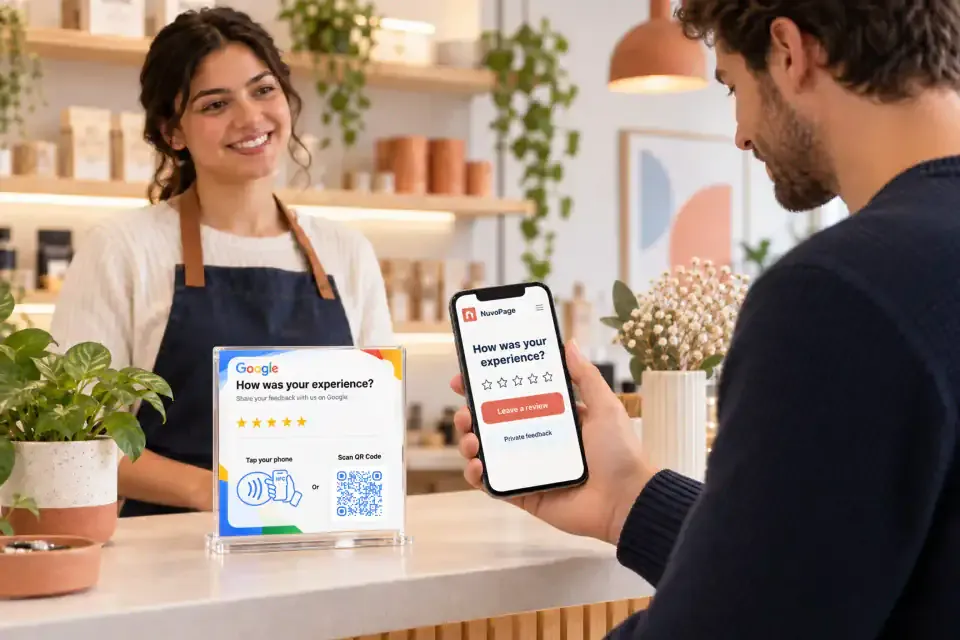
The private feedback form can be shown first, but the Google Review button remains available below it. Customers can choose the public option without submitting private feedback, and their rating does not remove that choice.
Your business receives another way to listen, while the customer keeps control over where they want to share their experience.
Public reviews and private feedback answer different questions
It helps to think of the two channels separately.
A public review often answers:
“What should other customers know about my experience?”
Private feedback often answers:
“What should this business know about my experience?”
Those questions can overlap, but they are not the same.
A customer may leave a five-star Google Review while privately suggesting an improvement. Another may send private feedback and choose not to post publicly. Someone else may go directly to Google because they want their experience to be visible.
All three are reasonable choices.
Feedback becomes valuable when you use it
Collecting feedback is only the beginning.
Look for patterns rather than reacting only to individual comments.
If several customers mention that they could not find the entrance, better signage may help. If people repeatedly mention slow replies, you may need to review how messages are handled. If customers consistently praise one part of your service, that tells you what your team is doing well.
Even one useful comment can lead to clearer instructions, a better handoff between employees, a change to a form, or a more accurate explanation of what customers should expect.
The goal is not simply to collect more comments. It is to understand the customer experience well enough to improve it.
Make sharing easy at the right moment
Customers are more likely to share useful feedback when the invitation appears naturally.
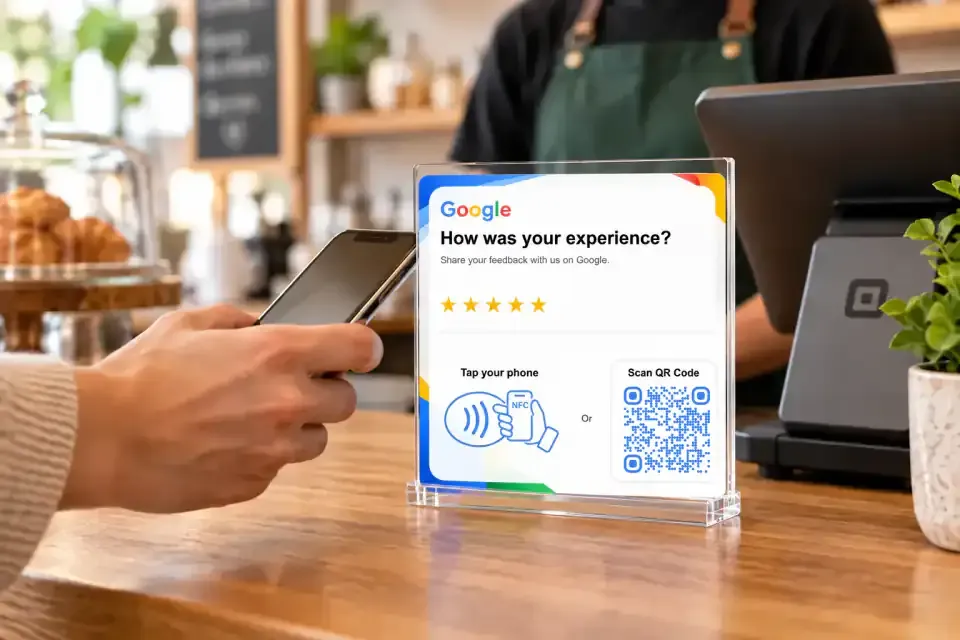
A Review Card at the counter, reception area, table, checkout point, or another appropriate location can make the request visible without requiring staff to explain a long process.
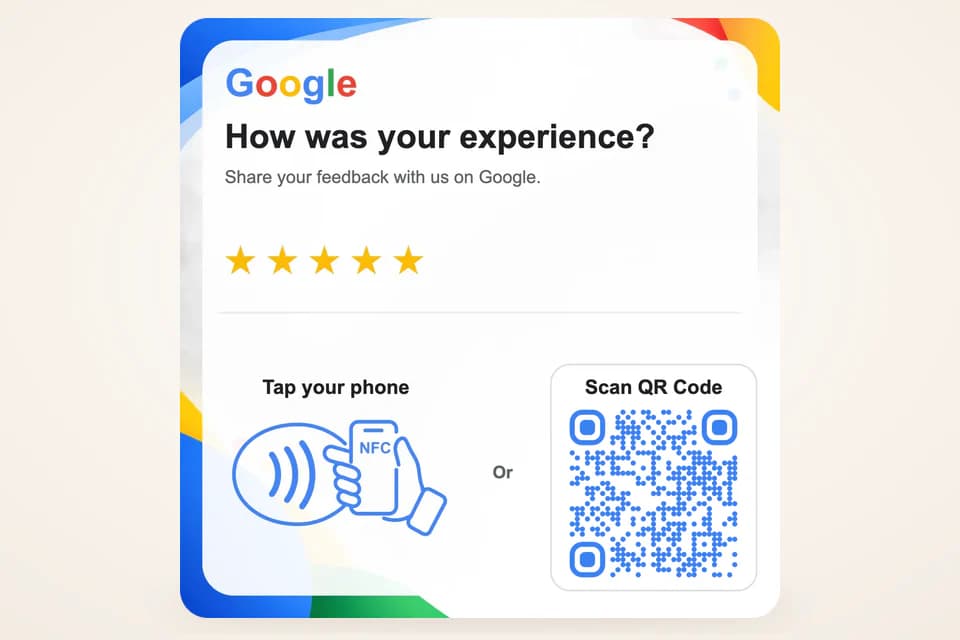
The customer scans the QR code or uses the available NFC option and opens the review experience on their phone.
Keep the physical message simple. Tell customers what the card is for and make the action easy to understand.
The digital experience should be just as straightforward. A few useful questions and an obvious public review option are often more helpful than a long survey.
Listen privately and build trust publicly
Public reviews and private feedback should not compete with each other.
Public reviews help future customers learn from previous customers. They can build trust and give people more confidence when choosing a business.
Private feedback helps the business learn directly. It gives customers a place to explain concerns, suggest improvements, and share details that may never appear publicly.
NuvoPage Review Cards bring those two purposes together.
By enabling the private-feedback-first option, you can give customers an immediate way to tell you what happened while keeping the Google Review button available to everyone.
A customer who wants to speak directly can do so. A customer who wants to review publicly can do so. A customer who wants to do both can do both.
That is a healthier goal than simply collecting stars.
Make it easy for customers to be heard, learn from what they tell you, and give them the freedom to decide where their experience should be shared.